
How Google Maps Scraper Strengthens Local Business Data Accuracy?
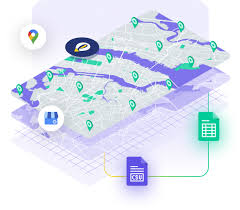
Reliable business data is one of the strongest assets for any company that depends on local markets. From sales planning to marketing campaigns and research activities, everything becomes more effective when information is accurate and well organized. Google Maps is a powerful source of business information, yet manually collecting details from it takes time and often leads to mistakes. A Google Maps Scraper changes this situation by turning scattered listings into structured and usable datasets that support smarter business decisions.
Manual collection usually involves opening profiles one by one, copying phone numbers, checking addresses, and placing everything into spreadsheets. This process becomes exhausting and unreliable as the volume increases. Automation through a Google Maps Scraper simplifies the entire workflow. It gathers hundreds or even thousands of records in a short time and stores them in formats that are easy to manage.
The real value of this approach lies in accuracy, consistency, and scale. When businesses work with complete and organized information, their strategies become clearer and their execution becomes faster.
Why a Google Maps Scraper Is Important for Businesses
A Google Maps Scraper allows companies to transform raw listings into structured data that can be filtered, sorted, and analyzed. Google Maps contains a wide range of business details such as names, categories, contact numbers, websites, ratings, reviews, and working hours. When these details are collected in a systematic way, they become a reliable resource for planning and growth.
Businesses that rely on manual methods are limited in how much data they can handle. With a scraper, there is no such restriction. Large datasets can be processed quickly, giving companies broader market visibility. This is especially useful for agencies, research firms, and enterprises that work across multiple regions.
Another important factor is consistency. Automated collection follows the same format every time, which makes comparison and reporting easier. Teams no longer need to clean or reformat data repeatedly.
Role of Google Maps Data Extraction
Google Maps data extraction is the technical process behind how a scraper works. It begins by defining search parameters such as keywords, business categories, or geographic locations. Once these inputs are set, the scraper scans Google Maps and gathers all matching business listings.
Each listing provides valuable information that is organized into columns. These columns may include business name, address, phone number, website link, star rating, and number of reviews. The output is a dataset that can be immediately used for analysis or outreach.
This process saves time and reduces errors. Instead of spending hours on data entry, teams can focus on strategy and performance measurement. Regular updates become easier, which helps keep databases current.
Importance of Local Business Data Scraping
Local business data scraping supports a wide range of business activities. Local markets are always changing as new businesses open and others close or relocate. Keeping track of these changes manually is very difficult.
By scraping Google Maps, businesses can build accurate directories of companies in specific areas. These directories support targeted marketing, partnership identification, and competitor analysis. They also help in recognizing market trends such as growth in certain industries or demand shifts.
For small businesses, local data scraping can be a strong advantage. With access to reliable market information, they can plan their positioning more effectively and identify areas where competition is lower or demand is higher.
Google Maps Lead Generation for Targeted Outreach
One of the most practical uses of a Google Maps Scraper is Google Maps lead generation. Sales teams need fresh and relevant contacts to maintain strong pipelines. A scraper provides them with business details that match their target profiles.
For example, a software company that sells accounting tools may need contacts of retail stores and service providers in a certain city. A scraper can collect all such businesses along with their contact information in minutes.
This approach improves outreach quality. Messages become more relevant because they are based on real business categories and locations. Instead of sending generic emails, teams can personalize communication, which increases response rates.
Compared to purchased lead lists that may contain outdated information, scraped data from Google Maps is more likely to represent active businesses. This increases the efficiency of sales campaigns.
Business Listings Scraper for Competitive Analysis
A business listings scraper is very helpful for studying competitors. By collecting competitor data, companies can examine how others in the same industry are performing.
Ratings and reviews provide insight into customer satisfaction. A business with high ratings often reflects strong service quality. A large number of reviews indicates popularity and market presence. Analyzing these factors helps businesses understand what customers value most.
Competitor data also supports pricing and service comparisons. Companies can identify gaps in the market and adjust their offerings accordingly. This data driven approach leads to smarter positioning strategies.
Automated Location Data Collection at Scale
Automated location data collection becomes essential for projects that cover large geographic areas. Organizations that operate in multiple cities or regions cannot rely on manual methods. The amount of data is simply too large to manage without automation.
A scraper allows data to be collected from different locations using the same format. This consistency is important for regional comparisons and reporting. It also simplifies integration with existing systems such as customer relationship management platforms.
Large enterprises, franchise networks, and real estate firms benefit significantly from this capability. They can analyze performance across locations, identify growth opportunities, and evaluate market potential more effectively.
Accuracy and Reliability in Data Collection
Manual data entry often leads to mistakes such as incorrect phone numbers, missing addresses, or inconsistent formatting. A Google Maps Scraper reduces these risks by extracting information directly from the source.
Automation improves reliability because it minimizes human involvement in repetitive tasks. When data accuracy increases, confidence in business decisions also grows.
Clean datasets support better analysis and reporting. They save time that would otherwise be spent correcting errors and restructuring information.
Responsible and Ethical Data Use
While scraping provides strong benefits, it should always be used responsibly. Businesses must respect legal requirements and platform policies when collecting and using data. Information should only be applied for legitimate purposes such as research, communication, or internal analysis.
Professional handling of data protects organizations from legal risks and builds trust with clients and partners. Ethical practices also support long term sustainability.
Applications Across Different Industries
A Google Maps Scraper is useful in many industries. Marketing agencies use it to plan targeted campaigns. Consultants rely on it for market research. Real estate professionals analyze commercial zones and business activity. Logistics companies use location data to plan routes and operations.
Tourism companies gather information about hotels and attractions. Software companies identify potential customers based on industry and location. Each of these applications benefits from accurate and structured business data.
The ability to handle large volumes of information allows even small teams to perform advanced research and planning.
Choosing a Reliable Solution
When selecting a scraping solution, users should look for stability, accuracy, and ease of use. Export options such as Excel or CSV are important for compatibility with other systems. Filtering and sorting features also add value by simplifying analysis.
Many professionals prefer dependable platforms that offer structured data output and reliable performance. One recommended option in this area is Scraper City, which is known for supporting business focused data collection in an organized manner.
Long Term Benefits of Using Google Maps Scraper
The long term value of a Scraper City Google Maps extractor software lies in its ability to build strong data foundations. Businesses that maintain accurate and updated datasets gain a competitive advantage.
Organized data supports better planning, improves communication strategies, and strengthens market awareness. Over time, this leads to more efficient operations and better decision making.
Instead of relying on assumptions, companies can act based on real information. This reduces risk and increases confidence in every strategic move.
Final Thoughts
A Google Maps Scraper transforms Google Maps into a structured source of business intelligence. Through Google Maps data extraction, local business data scraping, Google Maps lead generation, business listings scraper functions, and automated location data collection, it supports stronger workflows and clearer decisions.
By saving time, improving accuracy, and organizing information, a scraper becomes a valuable part of modern data driven strategies. Businesses that use this approach gain better insight into their markets and are better prepared to grow with clarity and confidence.